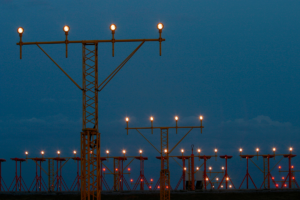
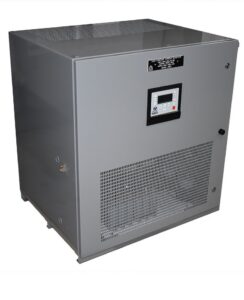
La mise à la terre et la liaison équipotentielle constituent des éléments essentiels des systèmes d'éclairage des pistes d'aéroport, car elles protègent les personnes, les équipements et les infrastructures électriques en cas de défaillance et garantissent le fonctionnement sûr de l'éclairage de l'aérodrome. Il est important que vos équipes de maintenance et vos prestataires électriques comprennent le fonctionnement de ces systèmes lors de la conception, de l'installation ou de l'entretien de l'éclairage des pistes et des voies de circulation.
Les Federal Aviation Administration (FAA AC 150/5340-30J) provides guidelines for grounding and bonding in airport visual aid installations, including runway and taxiway lighting. In this month’s blog, we summarize these guidelines to give you a quick overview of grounding, bonding, and counterpoise systems in airport runway lighting.
What Are Grounding And Bonding In Airport Lighting Systems?
Grounding and bonding are part of the electrical safety system that helps protect maintenance personnel and equipment when faults occur. Although they are closely related, they serve distinct functions within the grounding system.
In an airfield lighting installation, grounding provides a connection to earth or to an equipment grounding system, giving unwanted electrical current a safe path when a fault occurs. Bonding connects conductive metal components to help ensure that exposed metal parts are connected to the intended grounding arrangement.
If a fault causes electricity to reach the fixture’s metal housing, grounding and bonding connect the metal components to the grounding arrangement and help provide an intended path for fault current. Without it, the exposed metal might become energized, creating a critical safety issue.
Plus d'informations : Comment les aéroports peuvent réduire au minimum les temps d'arrêt lors des opérations de maintenance électrique des pistes
The Three Components Of A Light Base Ground
A light base ground is the grounding arrangement associated with an airfield light base or mounting stake. For most installations, the FAA requires the light base ground in airfield applications to include:
- A #6 AWG bare copper wire jumper connected to the grounding lug at the light fixture base or stake
- A minimum 5/8″ (16 mm) diameter by 8-foot (2.4 m) ground rod installed beside the fixture to provide an electrical connection to the soil
- A ground rod resistance to earth of 25 ohms or less, measured with a ground tester
A grounding electrode’s effectiveness depends partly on the electrical properties of the surrounding soil. For example, high-resistivity soil makes it harder to achieve a low-resistance connection to earth, so additional grounding rods or other grounding methods may be necessary, including in certain sandy or dry soil conditions.
It should be noted that grounding requirements depend on the type of system being installed, such as parallel-voltage power systems. In this case, an equipment grounding conductor must be connected to the ground bus at the airfield lighting vault. The equipment grounding conductor then connects to the internal grounding lug at each light base or mounting stake.
The Role Of The Counterpoise System
A counterpoise system is a network of conductors installed around or alongside an airfield lighting system, often underground. It prevents dangerous voltage differences between light fixtures, mounting stakes, and the surrounding soil, and intercepts and diverts high-voltage lightning surges away from fragile isolation transformers and fixtures.
Counterpoise systems can be connected to the airfield lighting system at specified locations. However, exact counterpoise design and connections depend on the applicable FAA requirements and the type of lighting installation.
Although the counterpoise system and light base grounds both provide electrical grounding, the counterpoise system acts as a network-wide shield to protect all interconnected lighting fixtures from external surges, such as lightning, while a light base ground provides localized protection, securing only the individual fixture it is connected to against internal electrical faults.
Design Considerations For Grounding And Bonding
For a new runway lighting system, replacement fixtures, or modifications to existing infrastructure, the grounding arrangement needs to be coordinated with the overall electrical design.
While designing the installation, electrical engineers and contractors need to have a thorough understanding of:
-What grounding arrangement the lighting system requires
-How the light fixture is bonded to the light base
-Where the grounding conductors connect
-How the counterpoise system is designed and connected
-Which testing and verification are required
Applicable FAA guidance, project specifications, and the equipment manufacturer’s instructions will help establish the installation requirements, as well as the guidance of your trusted runway lighting supplier.
If you’re unsure about your next runway lighting or electrical infrastructure system, call the Airport Lighting Company team. As a trusted partner to airports worldwide for almost 60 years, we thoroughly understand the FAA’s AC 150/5340-30 requirements and help our customers make informed decisions during the design, installation, and maintenance of their runway lighting system based on their location’s specific needs and configuration.
Connect With Us When Planning Your Next Airport Runway Lighting Project For Quality Products And Expertise You Can Count On.
L'équipe de Airport Lighting Company est à votre disposition pour répondre à vos questions pour savoir comment nos produits technologiques peuvent contribuer à améliorer la sécurité, la fiabilité et l'efficacité de vos pistes d'atterrissage. Appelez le 315-682-6460 pour un service rapide et amical sur lequel vous pouvez compter.